Search

List of blogging to me


Our list of the best business printers now being sold reflects both the quality of current offerings and the breadth of the market.
A notable thing about PCMag's list of the top 10 office printers is that it reflects the quality and breadth of today's business printer market. Units we chose range from models designed for sole proprietorships and micro-offices to ones built for high-volume operation in large workgroups and enterprise settings, and everything in between. They include both single-function units and MFPs monochrome and color models, lasers and inkjets, tabloid-format printers, ones notable for speed, others for low cost per page.
For nearly every unit we selected—all but one an Editors' Choice—several others in its respective niche are almost as good—and new printers are on the way. Whatever your needs in a business printer, there are great models to choose between.

$200 street 

The Brother HL-5340D delivers fast print speed, good paper handling, reasonably high-quality text, and better-quality graphics than most mono lasers.URL:

$400 street 
The Brother MFC-8480DN stands out as a winner, with fast print speed, reasonably high-quality output, and a wealth of all-in-one features.

$699 direct
The Canon Color ImageClass MF8350Cdn all-in-one (aka MFP) delivers impressive speed and output quality for a small office or workgroup.

$399.99 direct
The Canon Pixma iX7000 Inkjet Business Printer is a spot on fit for offices with an occasional need to print at tabloid (11- by 17-inch) size.

$699 direct
The HP Color LaserJet CM2320nf MFP offers almost all the right but lacks an option for printing on both sides of a page.

$120 direct
The HP Officejet 6000 Wireless offers a winning combination of paper handling, fast speed, and reasonably high-quality output overall.

$599 direct
The Epson B-510DN offers laser-class speed and a lower cost per page (based on claimed yield and ink price) than most inkjets or lasers.

$749 direct
The Lexmark E462dtn offers impressive speed and ample paper handling for a small to medium-size office or workgroup, but lacks paper handling options for heavy-duty printing.

$649 direct
The Xerox Phaser 6280DN color laser offers a highly attractive balance of speed, output quality, and paper handing for a small office or small workgroup.

$3,299.99
For office users, and, to a lesser extent, graphic artists who want professional looking color output, the Phaser 7500/DN delivers top-quality photos and graphics on plain paper.
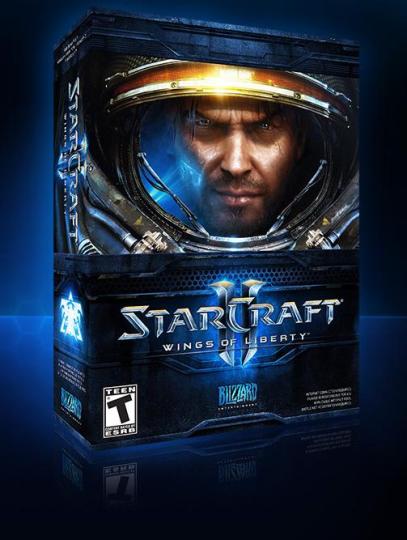
Fans of Starcraft, here is the much awaited pricing information of Starcraft II, Wings of Liberty. It will retail at SGD109 and with this purchase, players will be able to play online with no additional fee through the new version Battle.net.

Most of usäparticipate in this digital culture, whether by using an ATM card, composing and printing an office newsletter, calling a mail-order house on toll-free numberäor shopping at a mega-mall where the inventory is replenished just in time. (Ceruzzi 1) In the Information Age of today society has become dependent on technology; every aspect of our lives have become centered on how fast and efficiently something can be accomplished. The use of computers aids our stride to becoming technologically advanced. But how did we as a society arrive at such a point? How did we end up becoming so reliant on computers? These questions will hopefully be answered by looking back at the history of computers to date.
During the WWII, Eckert and Mauchly designed and built the ENIAC, an electronic calculator that computed firing tables for the U.S Army; it established the era of computing in the United States. After the War, the drum came about as the reliable, inexpensive but slow memory device. ERA sold the drum machines, advertising their dependability, large storage capacity and their high speed capabilities.
Eckert and Mauchly in 1951 started the intrigue with computers with their UNIVAC, a computer with computing abilities; as time passed the UNIVAC became essentially important. During the 1960πs, The Case 1107 provided the main computing facility for Case Institute of Technology in Cleveland Ohio in the United States (Walker). The UNIVAC was extremely large yet quiet; its front cabinets ranged from floor to ceiling. The central processor was capable of computing simple arithmetic equations. The Case 1107 was one of the first computers on Earth to provide access from remote locations both at other locations on the campus and as far afield as Erie, Pennsylvania (Walker). A transformation in circuit technology during the 60πs, enabled the transitor to become reliable and cheap enough to serve as the basic circuit element for processors (Ceruzzi 49).
By 1971, Intel had already released the world's first generally available DRAM chip and therefore, built the world's first single chip general purpose microprocessor. Two years later in 1973, IBM developed what is considered to be the first true sealed hard disk drive. The hard disk drive is extremely important when dealing with the computer systems of today. This invention revolutionized the industry of computers. CP/M, developed by Gary Kildall in 1974, was the first operating system to run on machines from different vendors. Apple II debuted in 1977, featured with a keyboard, graphic display and BASIC built into ROM. This simplified computer built by Apple would develop into todayπs extremely efficient and universal system run by Mac computers.
By the late 80's, technology of computers had soared. Hard disk capacity had increased dramatically and researchers introduced the fastest computer at the time, the Cray-1. The first color computer, introduced in 1981 was called the Commodore, and was sold for less than $300. Advancement occurred with the issuing of the Osborne portable computer; it was 24 pounds, included a tiny built-in screen and cost $1795. The Osborne portable computer sparked the later ideas for the laptop that we are familiar with today. The ideas for a small portable computer were on target yet Osborne went bankrupt and was unable to continue his computer line. 1981 also marked the issuance of the IBM PC. The original PC cost $3000, and came with 64 Kb of RAM, a floppy disk drive and monochrome graphics. It also came with DOS, an operating system based on CP/M (Patterson). In 1984 the Commodore 64 was introduced, this machine brought computers to the masses. For most people this was the first computer they ever owned. And who could forget the Apple Macintosh computer advertised in the 1984 Super bowl commercials? This machine changed the way people use computers today.
And now we come to the 90πs, the peak of the information age. Although Windows had been first issued in 1985, it was slow and was unappealing. In 1990, Windows released a new version, which included such programs as Microsoft Word and Microsoft Excel. Such programs were able to run on both Microsoft Windows and the Apple Macintosh. As the years progressed, both Microsoft and Apple got into debates and both worked on improving the speed and appeal of their competing products. The Internet started at businesses sharing information from computer to computer over phone lines; however, in the 90πs the world wide web became more widespread. The Web offered a simple, friendly, graphical way of browsing for information or entertainment. Suddenly the Internet boomed, and just about everyone who owned a computer wanted to connect (Patterson). Soon after, Windows π95 was released making Windows systems the most commonly used operating system. Today, Windows still remains the leading system of use among computers.
Since 1940πs the developments in the computer industry have taken leaps and bounds. Our society has become completely dependent on the use of computers and technology and it is necessary to understand the history of computers to fully appreciate what technology does for us today.
Works Cited
Ceruzzi, Paul E. A History of Modern Computing. Massachusetts: The MIT Press, 1998
Patterson, Jason. The History of Computers During My lifetime-. www.pattosoft.com.au/jason/Articles/HistoryOfComputers/1990s.html
And I was hesitant before downloading any game on your computer will you have?

Then see the results that tell you if your computer is running this game or not.
Link here