Search

List of blogging to me


Messenger, chat months experience always many viruses and damage your injury to others, the latest model for viruses after spread some example files sent to ask to see your image, or send you a file is unclear, or tells you visit foo, one trend is abounded methods spread viruses and break through the mail.
Here Sadun for months tool to get rid of all viruses Messenger, thus ensuring safety for you and your friends, share my post with your friends and colleagues to make sure all their computers free of any viruses or damages that may bring harm to others.
Download here link
Symantec and Trend Micro have yet to weigh in, but there are already some powerful premium AV options available. We detail the best of the bunch so far, and we take a look to see how some free options stack up, too.
The summer of 2010 isn't even over yet, but the 2011 antivirus utilities are pouring in already. Significant players are still waiting in the wings, it's true. Norton's 2011 product releases are imminent, as are Trend Micro's. Spyware Doctor and others won't be far behind. But quite a few of 2011's antivirus apps, both commercial and free, have already sprung up. Among others, Bit Defender Antivirus Pro 2011, Kaspersky Anti-Virus 2011, and Panda Antivirus Pro 2011 and Webroot AntiVirus with Spy Sweeper 2011 are all available and have already been through my testing. If you're looking to buy antivirus, today, the results show that there are already some solid choices available.
Note that, as always, when I say "antivirus" I mean a utility that protects against all kinds of malicious software, not just viruses. Trojans, spyware, rootkits, keyloggers, adware, scareware—a proper antivirus must handle all of these.
Standalone or Suite?
Many of this year's products blur the line between standalone antivirus and security suite. Panda Antivirus Pro 2011 includes a fully-functional personal firewall and can monitor other Panda installations on your network. BitDefender Antivirus Pro 2011 offers full remote management across the network as well as a top-notch antiphishing module. BitDefender and Kaspersky Anti-Virus 2011 both scan for security vulnerabilities, though BitDefender takes the concept a bit farther. Outpost Antivirus Pro 7.0 and BitDefender can block transmission of user-defined private data, a feature usually found only in suites. Ad-Aware Pro Internet Security 8.3 and Kaspersky will tune system performance and wipe out traces of computer and Internet use. Sometimes it's hard to remember that the product is "only" an antivirus, not a full suite.
Adjustable Interfaces, Built-in Support
Some users want to hear about every little security event, but most prefer a product that just does the job, without making a fuss. Ad-Aware appeals to both with a choice of simple or advanced mode. BitDefender goes even further. Not only can its users choose basic, intermediate or expert view, they can build a personal collection of their most-used tools.
Webroot AntiVirus with Spy Sweeper 2011 totally focuses on keeping everything as simple as possible. It updates automatically, scans while the system is idle, and interacts with the user through a completely redesigned interface. All the detail a tech-savvy user might want is available, but it's hidden when not needed.
Built-in and automated support features grace many of these tools. BitDefender includes a search box for help topics right on its main screen; a built-in tool will gather system information and contact an agent for chat-based support. Kaspersky's built-in support tool can send diagnostic reports to the company and process purpose-built scripts to fix specific problems. Panda's PSCAN lets remote analysts request samples and push fixes without requiring full chat-type interaction.
The Best Protection
I torture-tested all of these products, challenging them to clean up 13 malware-infested systems and to block malware from attacking a clean system. Interestingly, the most effective antivirus products in my tests were not those that bulked up with added features. Webroot offered the best protection overall, especially against rootkits and scareware. Ad-Aware also scored very well in my tests, but Webroot edged it out to become our Editors' Choice for standalone antivirus. For full details on how I test antivirus products see How We Test Anti-malware.
Recent Free Antivirus Releases
Commercial security vendors seem to have standardized on a "fall model year" plan, like car manufacturers. The numerous free antivirus products tend to come out with an update whenever it's convenient. I've reviewed several newly-released free products this summer, some very good, some not so good.
Panda Cloud Anti-Virus 1.1 remains our Editors' Choice for free antivirus protection. In some of my tests it has actually matched the top commercial products. For example, Panda Cloud Antivirus and Ad-Aware share the highest detection rate in my malware blocking test. With its extremely minimal user interface and cloud-based detection system it's a good choice for those whose budget doesn't stretch to a paid solution.
Malwarebytes' Anti-Malware 1.46 is a perpetual favorite among security experts. It's not uncommon to find another company's tech support agents calling on Malwarebytes to clean up a stubborn infestation. It's a tiny download, it installs quickly, and it gets right to business. What it won't do is protect your system from attack – it's strictly a cleanup tool.
I evaluated two free products for the first time this season, digital defender free 2.0 and Immunet Protect Free 2.0. Digital defender didn't detect much malware and left many threats running after allegedly removing them. Its for-pay Pro edition spent a much longer time scanning without appreciably improving the results.
Immunet focuses on protecting you by protecting the community of friends and contacts around you. You can easily hook friends up with a free copy of the program and view the security status of your entire community. Eventually this community- and cloud-based system may offer effective antivirus protection, but my testing showed that it doesn't at present.
Of course this isn't the final word on antivirus protection for 2011. I'll be reviewing many more apps in the weeks to come. Many of the heavy hitters haven't yet released their 2011 editions. For now, though, Webroot leads the pack.
Premium Antivirus


$29.95 direct or $39.95 for 3 licenses
This isn't a big update for Ad-Aware, but its price drops and it's impressive at keeping malware from installing on a clean system. It doesn't do as well when challenged to clean up existing malware, however.


$39.95 direct for three licenses
BitDefender Antivirus Pro 2011 is loaded with features that you'd normally find only in a full suite, most notable its superb phishing protection. It offers three distinct UI views and tons of configuration options. I'd just like to see more success in its central task of protecting against viruses and other malware.

$59.95 direct for three licenses
Kaspersky's latest antivirus looks better than ever, and independent labs consistently put it at or near the top. In my hands-on tests it scored well below what the labs would suggest, though, and it made a couple of serious faux pas false positives.


$24.95 for 3 licenses, direct
Outpost Antivirus Pro 7.0 doesn't detect or remove malware quite as well as the competition. It offers many features to protect clean systems against malware infestation, but it also spews confusing popups for good programs and malware alike. It's not a bad program, but you can do better.

$50.95 direct for three licenses; $40.95 for one
Panda Antivirus Pro 2011 uses many techniques to keep viruses and other malware from invading your PC. As a bonus, it includes a fully functional two-way personal firewall.


$39.99 direct; $49.99 for 3 licenses
Webroot's latest antivirus/antispyware utility was well worth the wait. It's been intelligently redesigned with an eye to simplicity, and it did very well in all aspects of testing, both malware cleanup and malware blocking.
Free Antivirus


Free
Just because something's free doesn't mean it's a bargain. This nondescript antivirus won't cost you any money, but relying on it will cost you in reduced security. Some products do better at keeping a clean system clean than at rooting out entrenched malware; this one isn't good at either.

Free
If all your friends and contacts have antivirus protection you'll be safer. Immunet encourages and enables sharing free antivirus protection with your community. Alas, based on my testing its cloud-based protection does a poor job cleaning up malware and a so-so job protecting a clean system from infestation.

Free
When support agents from other vendors run into malware that foils their own product they frequently direct users to run Malwarebytes. I can see why—it's small, fast, and simple. This free product should definitely be in your toolbox. Just don't pay extra for real-time protection.

Free
This free antivirus is great at keeping malicious software from installing on clean computers. It's less effective at cleaning up existing infestations, so, if it detects a threat, run another product for a second scrubbing.
Introduction: What is Malware?
Malware is any malicious piece of software that resides on a piece of electronic equipment. Anything that is running on your computer that you did not put on, or that you were tricked into installing, can be considered malware. Malware is a group term for anything malicious that can run on your computer, such as viruses, spyware, adware, trojan horses, and rootkits.
1.Virus: Anything that copies and duplicates itself on a hard drive.
2.Spyware: A program that spies on you and potentially sends information from your hard drive to remote locations.
3.Adware: Software that shows advertisements.
4.Trojan Horse: A malicious program that acts as something else to gain access to your computer.
5.Rootkit: Hides services at the kernel level to avoid detection.
In broader terms, malware is anything that connects to the Internet without your knowledge and approval or that displays something unintentional
Should I Pay for Protection or Use Free Software?
You may hear conflicting opinions on this decision. A free piece of software can offer the same basic protection as a pay version. However, the pay version will offer other features that may better protect you, as it integrates firewalls, anti-virus, and anti-spyware programs.
Security Suite Advantages: Easy to install and run, easy to update, and you don't have to check to make sure it works. Security suites are relatively inexpensive for the amount of protection you receive. They usually offer a free trial.
Security Suite Disadvantages: If the program goes down all your protection goes down. Security Suites often use more memory than individual programs and are oftentimes bundled with additional add-ons, both of which could potentially make your computer run slightly slower.
If you're not sure whether you need to pay for protection, compare your options. There are many different companies that analyze the different products that are available. A good example is Norton Antivirus 2007 versus AVG Anti-Virus Free Edition.
Internet Security Suites
If you decide to purchase a security suite, there are numerous programs that will protect you from malware and just about anything else you can imagine. Some great pay programs are:
Kaspersky Internet Security
User Guide With Installation Instructions
AVG Internet Security
User Guide With Installation Instructions
Zonealarm Internet Security
User Guide With Installation Instructions
I Have A Mac, What About Me?
Many people say that Macs are immune to malware; this is not true. Macs are just as vulnerable to malware as Microsoft Windows. Fortunately, protecting your Macintosh computer is not at all difficult. Some great programs to use to protect your Mac from malware are:
Norton Internet Security: Norton Internet Security, by Symantec, is one of the most popular security programs available.
ClamXav: ClamXav is a free, open-source virus scanner.
McAfee Virex for Mac: McAfee Virex is based on the popular virus scan engine of McAfee Anti-Virus.
Step 1: Download Windows Updates
Downloading Windows Updates is the most important step a computer user can perform. Downloading Windows Updates not only keeps your copy of Windows current, but it also contains needed fixes for possible vulnerabilities
Downloading Windows Updates with Internet Explorer
To use Microsoft's version of Windows Update you must use Internet Explorer because it needs to download certain ActiveX controls which are only available for Internet Explorer. See the next section if you want to use Mozilla Firefox.
1.Please go to Microsoft Windows Update.
2.Windows Update will check to make sure you have the proper ActiveX controls.
3.If you do not have the proper controls, you will be prompted to install them; please do so.
4.Click the Express button.
5.Windows Update will now begin scanning for available updates.
6.After Windows Update loads it will present a list of available updates.
7.Please click Install Updates.
8.The updates will now download and install, please be patient.
9.After the updates are installed it may ask you to restart your computer. If it does, please click on Restart Now.
10.Your computer is now fully updated.
Downloading Windows Updates With Mozilla Firefox
Normally if you want to use a web browser other than Internet Explorer, you would be out of luck. But Windiz Updates allows you to use Mozilla Firefox or any other non-Internet Explorer browser to update Windows.
1.Please go to Windiz Updates and click on download and install.
2.A yellow bar will appear below your address bar. Please click Edit Options.
3.Click the Allow button.
4.Then click Close.
5.Go back to Windiz Updates and you should be presented with a pop-up window.
6.In this pop-up window, please click the Install Now button.
7.The Windiz Updates Firefox extension will now install, please be patient.
8.After the extension is installed click Scan your PC.
9.Windiz Updates will now scan for available updates.
10.If it prompts you to allow access to files on your computer, please click the Allow this Site button.
11.Install all the updates you are directed to install.
Your screen may flash a couple of times. Don't worry, this is completely normal.
Now that you have the required Windows Updates, you are ready to take more proactive efforts to secure your computer. Installing Windows Updates alone is not enough to protect your computer from malware
Step 2: Install Anti-virus software
Anti-virus software is an absolutely must. Not running anti-virus software leaves you open to viruses, which may lead to more malware invading your system.
Make sure that you install only one anti-virus software. Doing otherwise will cause severe system instability and the possibility of having to reinstall your operating system.
Installing AVG Anti-Virus Free Edition
AVG Anti-Virus Free Edition is one of the best free anti-virus softwares available. It has real-time monitoring and thoroughly scans all files and registry entries of malicious viruses.
1.Download AVG Anti-Virus Free Edition from here.
2.Please save it to your desktop for easy access.
3.Doubleclick the file that you have just downloaded.
4.Click Next.
5.Click Accept to agree to the terms of the license agreement.
6.AVG Anti-Virus will now load files so it can proceed with the installation.
7.When it asks if you want a Standard Installation or Custom Installation, make sure Standard Installation is marked and click Next.
8.On the following screen, click Next.
9.Click Finish.
10.AVG Anti-Virus will now install to your system, please be patient.
11.Click OK when prompted.
Updating AVG (Photo by Mahalo)12.AVG Anti-Virus will now show a window that states it has been successfully installed. Please click Next.
13.Click the Check for Updates button.
14.Put a checkmark next to "Do not ask for the update source next time".
15.Click Internet.
16.When the update selection window comes up, please click Update.
17.The updates will now download and install to your computer, please be patient.
18.After it updates you will be presented with the first run screen again.
19.Click Next.
20.Keep the default daily scanning selections and click Next.
21.Click Next twice and then finally click Continue.
22.AVG Anti-Virus is now set up and protecting your computer.
Installing avast! 4 Home Edition
1.Download avast! 4 Home Edition from Avast's website.
2.Save this file to your desktop for easy access.
3.Doubleclick the file you just downloaded.
4.In the resulting window, please click Next.
5.Read the information presented, then click Next.
6.The license agreement will now display, please put a dot next to "I Agree" and click Next after you have read this.
7.Keep the default installation directory and click Next.
8.Keep all the typical installation guidelines and click Next.
9.avast! will now show you all the program modules it will install, please click Next.
10.It will now install to your system, please be patient.
11.You will get prompted whether you want to schedule a boot up scan, please click No.
12.Click Finish to complete the installation and restart your computer.
13.When your computer finishes booting up, it will ask that you register with them,
14.Please click on the avast@ Home Registration page button.
The license key window (Photo by Mahalo)15.When the web page opens, please click on I'm a new user and I need a registration key for avast! Home Edition.
16.Please fill out the form and click on Register.
17.You will receive an e-mail from register@avast.com within the next 24 hours containing your free product key.
18.Find the license key in the e-mail and copy it to your clipboard.
19.Right-click the blue icon representing the resident protection in the system tray and choose "About avast!"
Or in the simple interface choose 'Help' -> 'About avast!...'.
20.Press the License key button in the lower right corner.
21.Enter (or paste) the license key into presented text dialog.
22.Click OK and your copy of avast! Home Edition is activated.
Installing Comodo AntiVirus
Comodo AntiVirus provides powerful anti-virus protection. It is completely free for the life of the product.
1.Please go to Comodo's official site and download Comodo AntiVirus.
2.Save this file to your desktop for easy access.
3.Doubleclick on the file that you just downloaded.
4.Click Yes when it asks if you wish to continue.
5.Click the Next button when the installation wizard starts.
6.Click Yes to accept the license agreement.
7.Click Next to keep the default installation directory.
Creating white list profile, remember to click Start upon restart (Photo by Mahalo)8.Comodo AntiVirus will now install to your system.
9.When you get a prompt that it wants to create a user-profiled white list, please click Install.
10.Comodo AntiVirus will now finish installing, please be patient.
11.Click the OK button at the license activation window.
12.Now click Finish to finish the installation of Comodo AntiVirus.
13.When your computer starts back up you will be presented with a window that wants to create a whitelist. Please click the Start button.
14.This may take several minutes, so please be patient.
15.When the scanning process is finished, please click Finished.
Step 3: Install Anti-malware Software
Anti-malware software is a must. Anti-virus software is a good first step, but most malware is not viruses. Without an effective anti-malware application you leave your computer susceptible to other various critters floating around the net, such as:
Spyware: A program that tracks what you do on your computer and the web - and does things without your knowledge on your computer and the web, sometimes with your personal information.
Adware: Software that plays advertisements on your computer.
Trojan Horse: An application that says it will do one thing, but actually does something very different.
Rootkit: Hides things that are installed on your system, and conceals activities of other applications on your system, allowing those applications to do things without your knowledge.
You can install more than one Anti-malware application. Please be aware, however, that if you have too many Anti-malware applications it may slow down your computer.
Comodo BOClean Anti-Malware
Comodo Anti-Malware is a powerful anti-malware application that offers real-time monitoring for malware. It also scans for more than just files. This means that if a piece of software is infected, but has a different file name, it will still be detected and removed by this program.
1.Download Comodo BOClean Anti-Malware from here.
2.Please save it to your desktop for easy access.
3.Doubleclick on the CBO_Setup_4.25.exe icon on your desktop.
Installing Comodo (Photo by Mahalo)4.Press Accept to agree to the license agreement.
5.When it asks if you have already uninstalled any previous versions, click Yes.
6.Push OK to go onto the next message.
7.Now click the INSTALL button to begin installing.
Please be aware that installation may take a few minutes.
8.When it asks to go online to collect the latest database updates, click OK.
9.Click the Next when it appears.
10.Comodo Anti-Malware will now update, please be patient.
11.Comodo BOClean Anti-Malware will now present you with a window that says it has been installed. Please click OK.
12.Comodo BOClean is now installed on your system.
Spybot Search & Destroy
Spybot Search & Destroy is a very popular spyware-removing program. One of the original anti-spyware applications, Spybot offers a very good real-time protection against malware.
1.Please go to the Safer-Networking homepage and download Spybot Search & Destroy.
2.Save this file to your desktop for easy access.
3.Doubleclick on the spybotsd15.exe file that you just downloaded.
4.Click OK to keep the default English language selection.
5.On the next screen, click Next.
6.Put a dot next to "I accept the agreement" to agree to the terms of the license agreement and click Next.
7.On the next screen, click Next to keep the default installation folder.
8.Click Next to keep all the default components in the installation.
9.On the next screen, click Next.
10.On the next screen, make sure that both the boxes under "Permanent protection" have checkmarks next to them and click Next.
Immunizing your computer (Photo by Mahalo)11.Now click Install to install Spybot Search & Destroy on your computer.
Please be patient as it installs.
12.After the installation is complete, please click on Finish.
13.If Spybot Search & Destroy does not automatically open, please doubleclick on the desktop icon.
14.You will be presented with a setup wizard, please click Next.
15.When it asks if you want to search for updates, please click Search for updates.
16.On the mirror list window, please click on Continue.
17.On the next screen click Download.
18.After it is finished updating click OK.
19.Then click Exit.
20.In the Spybot S&D Wizard window click on Next.
21.Now click Immunize this system.
Please be patient, this may take a few moments.
22.Please click on Next when prompted.
23.Now click on Start using the program and the wizard will disappear.
Step 4: Install Firewall Software
A firewall is a very important piece of software. Firewalls keep your computer hidden from potential attackers.
Please make sure that you only install one firewall, otherwise you will cause severe system instability and may have to reinstall your operating system. If you are currently using another program's firewall, make sure to uninstall it before using either of these programs.
Installing Zonealarm Firewall Free
ZoneAlarm Firewall is a very powerful, easy to use firewall.
1.Please go to ZoneAlarm's site and download ZoneAlarm Free Edition.
2.Save the file to your desktop for easy access.
3.Doubleclick on the zaSetup_en.exe file that you just saved.
4.After you doubleclick the file, it will ask which version of Microsoft Windows you are using.
5.If you are using Windows Vista, please put a checkmark next to Vista.
6.If you are not using Vista, then please keep the dot next XP/2000 and click Next.
7.Make sure there is a dot next to "Download and Install" and click Next.
8.ZoneAlarm will now download to your computer, please be patient.
9.After ZoneAlarm downloads, it is now ready for installation by clicking the Next button.
Clicking the Next button (Photo by Mahalo)10.On the next screen, please enter a valid e-mail address so you can register and download future ZoneAlarm updates and then click Next.
11.Put a checkmark next to the "I accept the terms of the preceding License Agreement" and click Install.
12.The ZoneAlarm window will disappear momentarily. Do not try to re-launch the program, it is operating correctly.
13.Please fill out the survey by marking the appropriate choices and click Finish.
14.You will get a window that asks if you want to start ZoneAlarm now, click the Yes button.
15.Click the No Thanks button when it asks if you want to try ZoneAlarm Security Suite.
Security Suite is, as the name implies, a security suite created by ZoneAlarm. Although it has a free trial, it is a pay program.
16.On the next screen, ZoneAlarm says it will scan your computer so it can auto-configure the necessary configuration.
17.ZoneAlarm is now installed on your computer and after a restart will protect your computer.
18.Click Finish to restart your computer.
19.When your computer restarts you will be presented with a Getting Started window, please watch the video and then after click Finish.
20.ZoneAlarm is now configured for your computer and protecting you.
Installing Comodo Firewall Pro
1.Please go to Comodo's official site and download Comodo Firewall Pro.
2.Save the file to your desktop for easy access.
3.Doubleclick the file that you just downloaded to start the installation wizard.
4.When Comodo asks you to uninstall any third party firewalls, please click Yes to continue.
Advanced configuration (Photo by Mahalo)5.Click Next at the resulting window.
6.Click I Accept to agree to the terms of the license agreement.
7.Keep the default installation directory and parameters and click Next to begin installation.
8.You will be presented with the configuration wizard. Please click Next.
9.Please click Next to keep the default Advanced Firewall with Defense+ selection.
10.Click Next to accept the default automatic rule creation.
11.On the following screen, click Next.
12.On then following screen, click Next.
13.Finally click Finish twice and restart your computer.
14.Comodo Firewall is installed and protecting your computer.
Step 5: Avoiding Malicious Websites
The best way to protect your computer from malware is to avoid malicious websites. Unfortunately, it isn't always easy to see the difference between a legitimate site and a malicious one.
Using WOT
WOT is a free browser extension that works on both Internet Explorer and Mozilla Firefox. When you attempt to visit a site that has suspect content, the extension will alert you before you enter the site and/or download anything from the site. WOT has a similar rating system to McAfee SiteAdvisor.
Red: Sites that you want to avoid. These sites most likely contain malware or have some other type of scam. Avoid at all costs!
Yellow: Sites that you may want to avoid. It is up to you whether you want to stay on this site or not.
Grey: Sites that have not yet been analyzed. These are sites that could be good or bad; use your best judgment.
Green: Sites that are okay to visit. These sites have absolutely no malicious intent.
Instructions for Internet Explorer
1.Please download the WOT browser extension.
2.Save the file to your desktop.
3.Doubleclick on the file and put a checkmark next to I accept the terms of the License Agreement and click the Install button.
4.It will now install on your computer.
5.After it is done installing, click the Finish button to finish the installation and start using WOT.
Instructions for Mozilla Firefox
1.Please go to the WOT website to download the WOT firefox extension.
2.Look by your address bar and click Edit Options.
3.On the next window, click Allow.
4.Doing the above allows WOT to install on to your computer.
5.You will be presented with a Software Installation window, please click the Install Now button.
6.A new window named "Add-ons" will pop-up, please click Restart Firefox.
7.WOT is now installed on your system.
Using McAfee SiteAdvisor
McAfee SiteAdvisor is a useful Mozilla Firefox extension and Internet Explorer add-on that uses a database of sites to analyze web pages and determine whether the page is safe to visit. It does not however, prevent you from going to the website if you choose to ignore a warning. To interpret what McAfee SiteAdvisor is telling you look at its logo (either in your toolbar or down by your clock) and check if it's:
Red: Sites that you want to avoid. These sites most likely contain malware or have some other type of scam. Avoid at all costs!
Yellow: Sites that you may want to avoid. It is up to you whether you want to stay on this site or not.
Grey: Sites that have not yet been analyzed. These are sites that could be good or bad; use your best judgment.
Green: Sites that are okay to visit. These sites have absolutely no malicious intent.
Installation Instructions for Internet Explorer
1.Please go to SiteAdvisor's website to download the SiteAdvisor browser extension.
2.Click on Download SiteAdvisor.
3.Save this file to your desktop for easy access.
4.Doubleclick on the file that you just downloaded to launch the installation wizard.
5.When you get a security warning pop-up, please click on Run.
6.On the McAfee SiteAdvisor set-up window, please click Next.
7.When you see the SiteAdvisor privacy policy, please click Next.
8.Click I Agree to accept the license agreement.
9.When it asks if you want to join the product improvement program click No.
10.McAfee SiteAdvisor will now install to your computer, when it is done please click Finish.
11.McAfee SiteAdvisor is now installed on your computer.
Installation Instructions for Mozilla Firefox
1.Please go to McAfee Siteadvisor's website to download the McAfee SiteAdvisor firefox extension.
2.Put a dot next to I agree to these terms and conditions and click Install SiteAdvisor for Firefox now.
3.Look by your address bar and click Edit Options.
4.On the next window, click Allow.
5.Doing the above allows McAfee SiteAdvisor to install on to your computer.
6.Click Install SiteAdvisor for Firefox now again.
7.You will be presented with a Software Installation window, please click the Install Now button.
8.A new window named "Add-ons" will pop-up, please click Restart Firefox.
9.McAfee SiteAdvisor is now installed on your system.
Using a MVPS Host File
This step is for experienced users only
Setting up a Hosts File is one of the easiest and most effective ways to avoid malware download sites.
Please note that the below instructions are not for Microsoft Windows Vista, for instructions for Windows Vista, please see here:
1.Please go here and download the MVPS Host file.
2.Please save this Zip file to your desktop for easy access.
3.Please doubleclick on the Hosts.zip file on your desktop.
4.Now click on Extract Files and follow the wizard that you are presented with by clicking Next and finally Finish.
Doubleclicking on MVPS.bat (Photo by Mahalo)5.The files have now been extracted to your desktop.
6.In the resulting window, please doubleclick on the mvps MS-Dos Batch File.
7.In the resulting command prompt window, please click Enter on your keyboard.
8.The host file is now installed on your system and will block most harmful websites.
9.To test that it works, please go to http://www.doubleclick.com. It will give you an error message saying it cannot connect to the website or that your browser cannot display the page.
10.The host file has been installed at C:\Windows\System32\Drivers\etc\hosts.
It’s always been our philosophy at AVG that everyone has the right to basic computer security at no charge. And our 110 million users think we’re doing a pretty good job. So if you’re planning to spend time online and you regularly exchange files with friends, check us out.
Surf, and search with confidence, while LinkScanner® keeps you safe from harmful sites
Get online and offline protection from viruses, spyware, and other nasties
Enjoy consistently high-speed PC performance with our new enhanced virus scanner
Automatic updates keep your protection current
Compatible with Windows 7, Windows Vista, Windows XP and Windows 2000

avast

Antivirus and anti-spyware
Secures e-mail and chats
Free for home use
Antivirus and anti-spyware engine
avast! Intelligent Scanner
Silent/Gaming Mode
Behavior Shield
Real time anti-rootkit protection
Smart virus updates
avast! Community IQ
Behavioral Honeypots
Green computing
avast! iTrack
File System / Mail Shield
Web Shield
IM / P2P Shield
Network Shield
More Info
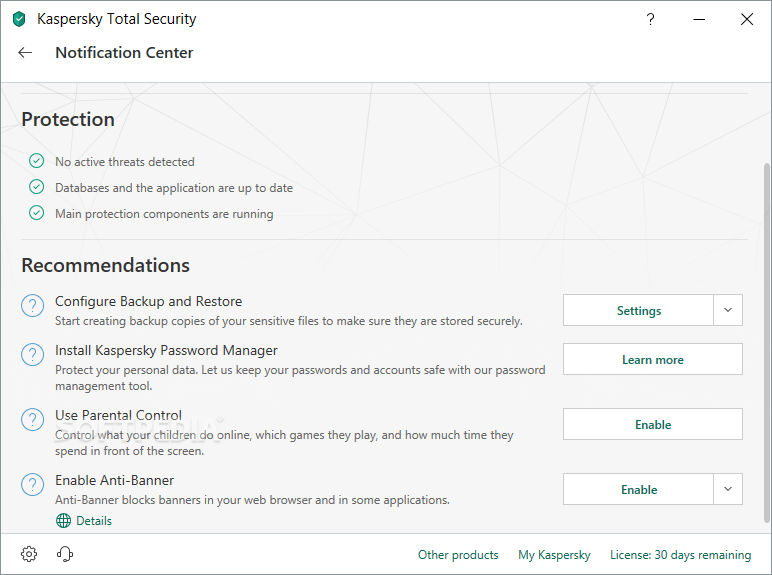
Kaspersky PURE NEW
Kaspersky PURE far exceeds regular PC protection. It renders your PC highly immune to cyber threats of any kind. You can trust Kaspersky PURE to protect the integrity and privacy of all your digital assets and give you complete peace of mind.
And More Anti-Virus


From the official Press Release:
The Continental design team’s task is to give standard tyres a unique look to compliment the manufacturers’ concept car. This varies depending on the vehicles style and audience.
"Sports car tyres require aggressive tread patterns which give the feeling of speed. These also often have colour to highlight the tread or the tyre sidewalls.
"For SUVs, the manufacturer expects prominent tread blocks for maximum off-road traction."
"The smaller the wheel arch and the broader the tyre, the more prominent the sidewall design. If more space is available for the tyre, the tread design is more important."
Every special production tire takes three to five months to develop. The manufacturers brief is taken and then the workshop creates prototypes of various design ideas by hand.
Continental has created special tyres for BMW, Ford, Jaguar, Lincoln, Mercedes-Benz, Vauxhall, Smart, Volvo and Volkswagen. This year’s IAA will again showcase concept vehicles with Continental’s elaborately designed, hand-made tyres.
More info

For those who have read my article about oil change intervals, I recommend keeping your tires rotated every other oil change, or about every 6,000 miles. Though it’s a good idea to reference the owner’s manual for your vehicle, if the recommended interval exceeds 6,000 miles, I encourage you to stick with my 6,000 mile recommendation. Keeping tire rotation schedule tied to every other oil change helps make it easier to remember and keeps your tires performing at their best. Extended rotation intervals generally lead to uneven tread wear, resulting in excessive road noise or safety concerns.
Equally as important as rotation frequency is the rotation pattern. The vast majority of vehicles on the road today have four radial tires of the same size on all four corners. These vehicles will benefit from a standard “cross” rotation pattern, with a forward cross being used for front wheel drive vehicles and a rearward cross being used for rear wheel drive and four wheel drive vehicles. With the forward cross, the two front tires are moved straight back, remaining on the same side of the vehicle (e.g. left-front to left-rear) and the rear tires are crossed to the front (e.g. right-rear to left-front). The rearward cross is just the opposite. The rear tires are moved straight forward and the front tires are crossed to the back.
There are some unique tire rotation needs to be aware of:
Some tires are unidirectional, meaning that they are designed to rotate in one direction only. These tires can only be rotated front to back and vice versa on the same side of the vehicle.
Some vehicles have different size wheels and tires between the front and back but the tires can rotate in either direction. These tires can only be rotated side to side on the same end of the vehicle (e.g. left-front to right-front).
Finally, some vehicles have different size wheels and tires between the front and back that are also unidirectional. These tires cannot be rotated.
Anytime you rotate your tires, be sure to check and adjust tire pressure as necessary. Additionally, inspect the tread closely for any abnormal wear. The tread should be wearing uniformly and evenly. Any “feathered” edges or wear that is uneven in appearance can indicate the need for other vehicle repairs, including: shocks and struts, wheel alignment, or even something more serious, such as a ball joint or tie rod end. Additionally, check the depth of the tread to ensure there is sufficient tire tread remaining. Tires should be replaced when there is 4/32” or less of tread remaining.
More on determining the correct tire pressure for your vehicle and measuring tread depth in upcoming articles!
More info

More Info
View the Tire Inspection Chart for information on how to identify abnormal tread wear, sidewall damage, tire separations, road hazards and bead problems.
When purchasing new tires, it is recommended the tires be mounted by a professional; do not attempt to mount them yourself. Serious injury could result from a tire being mounted improperly. While mounting new tires, the dealer can inspect the vehicle, rim, brakes, etc., for any potential problems as well as recommend the proper inflation, correct positioning, and correct tire size.
Maxxis recommends that P-Metric automotive tires never be used as replacements for Light Truck tires or on a vehicle that is equipped with dual rear tires. Each tire is manufactured with specific speed rating and load requirements to ensure proper vehicle use

More info
http://www.maxxis.com/AutomobileLight-Truck/Tire-School.aspx